


Why the lead time for industrial all-in-one PCs/Touch monitors with Optical Bonding is typically long?
The extended lead time for industrial all-in-one PCs featuring fully laminated displays is typically the result of multiple interconnected factors, not a single cause. The main reasons include:
1. High Process Complexity and Precision Requirements:
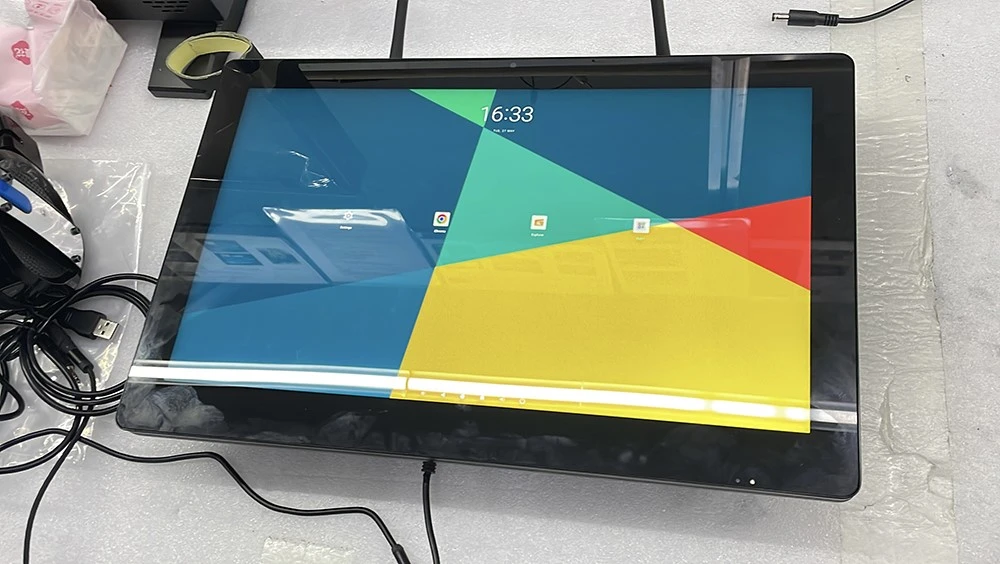
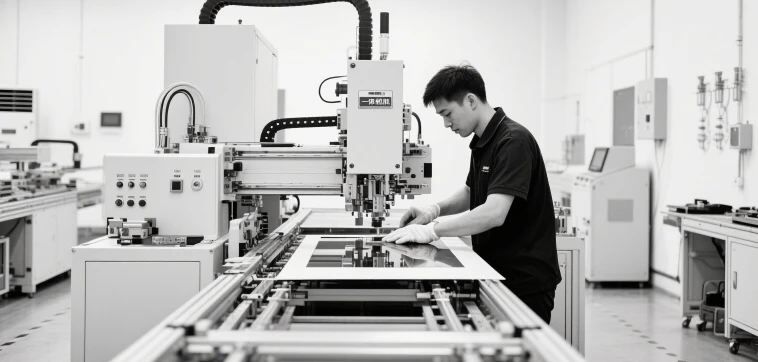
* Demanding Cleanroom Environment: The core of full lamination involves bonding the touch panel (cover glass) and the liquid crystal display (LCD) together completely using optically clear adhesive (OCA or LOCA), eliminating any air gap. Any tiny speck of dust, particle, or bubble can severely impact the display quality (causing dead pixels, dark spots, rainbow effects) or even lead to product failure. Therefore, the entire lamination process must be conducted in high-grade (e.g., Class 100, Class 10) cleanrooms, imposing extremely strict requirements on the environment and operations
* Precision Alignment: The touch panel and LCD require extremely precise alignment, often within micrometer tolerances. Any minor misalignment can cause touch inaccuracy or display anomalies at the edges.
01
* Multi-Step, Precise Process (Dispensing/Film Application, Lamination, De-airing/Debubbling, Curing): The process involves numerous delicate steps:
02
* Dispensing/Film Application: Uniform application of OCA liquid adhesive or precise placement of OCA optical film.
03
* Lamination: Precise pressing together of the cover glass and LCD within the cleanroom.
04
* De-airing/Debubbling: Removing microscopic bubbles generated during lamination using equipment like autoclaves, a process that takes time (autoclave debubbling typically requires tens of minutes to several hours).
01
* Curing: If using UV-curable adhesive (LOCA), specific UV light exposure time and intensity are needed for curing. While OCA doesn't require curing, stability after lamination still needs time.
02
* Yield Rate Challenges: Due to the numerous steps, high precision requirements, and demanding environment, the yield rate (first-pass yield) for full lamination is usually lower than traditional air-gap methods (like G/G, G/P). Defective units may require
03
rework (delamination and re-lamination, which is difficult and risky) or scrapping, increasing time and material costs.
04
* Customized Components: Screens for industrial all-in-ones often have highly customized specifications – size, interfaces, brightness, wide-temperature operation, ruggedization requirements. Core components like LCD panels, touch panels (especially custom-sized or surface-treated capacitive/resistive touchscreens), and specific OCA/LOCA adhesives inherently have long procurement cycles, particularly for small batch orders.
* Long Material Preparation Time: All materials (LCD, Touch Panel, OCA/LOCA, backlight units, etc.) need to be conditioned in a cleanroom environment (dehumidified, de-dusted) to reach a stable state before lamination can begin.
* Unstable Supply of Key Materials: Optical adhesives, specific driver ICs, and other key materials can sometimes face supply shortages or extended lead times.
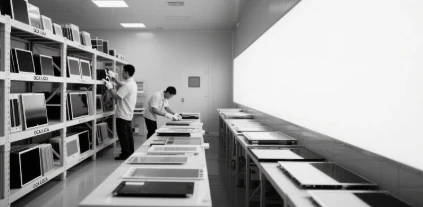
3. Stringent Industrial-Grade Testing and Certification:
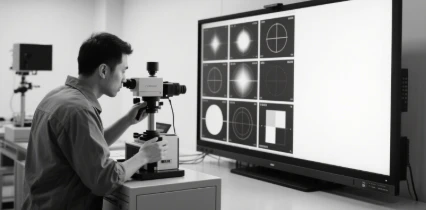
* Environmental Reliability Testing: Industrial products require operation under wide temperature ranges (e.g., -20°C ~ 70°C), high humidity, dust/water resistance, vibration resistance, and shock resistance. The fully laminated display, as a core component, must pass these rigorous reliability tests (like high/low temperature cycling, damp heat aging, vibration/shock tests), which themselves consume significant time (days or even weeks).
* Optical Performance Testing: Tests include brightness, uniformity, color gamut, viewing angles, touch accuracy, and linearity to ensure they meet industrial application requirements.
* Long-Term Aging Testing: Some customers or applications may require extended aging tests to verify long-term stability.
* Certification Requirements: Compliance with specific industry standards or certifications (e.g., CE, FCC, UL) may be needed, adding time for the certification process.
* Small Batches, High Mix: Industrial market orders are typically characterized by small volumes, high variety, and significant customization. This necessitates frequent production line changeovers for different models, involving equipment adjustments, parameter settings, and first article inspections, reducing efficiency compared to mass production in consumer electronics.
* Production Scheduling: High-grade cleanrooms are a scarce resource. Manufacturers need to schedule production batches based on order priority and material availability. Small batch orders often need to wait for a suitable production slot or be accumulated to form a larger batch to amortize the high operating costs of the cleanroom.
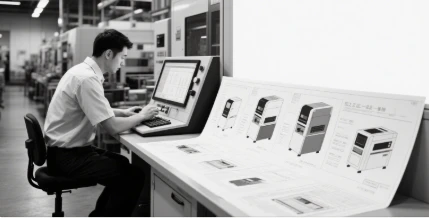
5. Quality Control and Rework Difficulty:
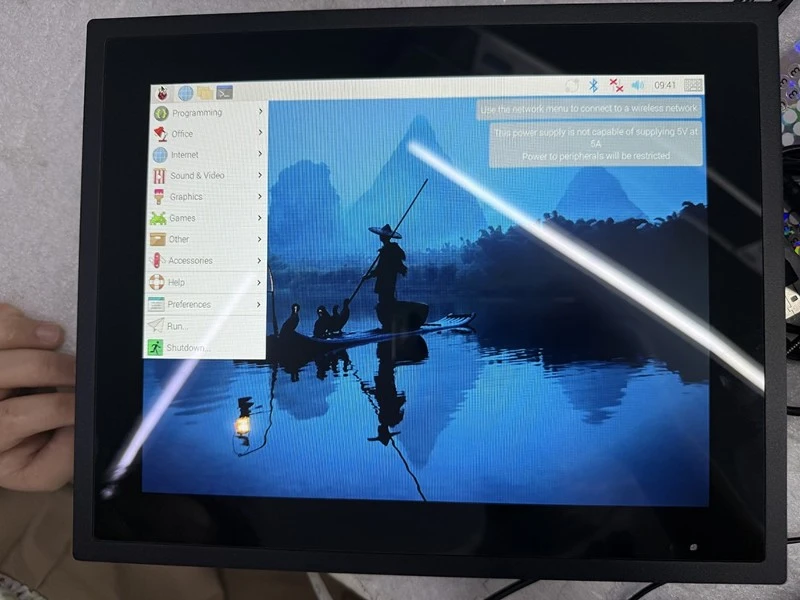
* Strict Process Monitoring: Strict quality checks (incoming inspection, in-process inspection, final inspection) are required at each stage to intercept issues promptly.
* Difficult and Time-Consuming Rework: If a fully laminated screen has defects (bubbles, dust, delamination), rework is extremely difficult. The delamination process risks damaging the expensive LCD panel or touchscreen. Rework success rates are low and the process is time-consuming. Consequently, manufacturers prioritize strict upfront control to prevent defects, which can lead to a more conservative production pace.
In summary, the core reasons for the long lead time of industrial all-in-one PCs /Touch monitors with Optical Bonding are:
01
* The inherent high complexity, precision, and environmental demands of the lamination process lead to long production cycles and yield challenges.
02
* Customized components and stringent industrial-grade testing/certification significantly extend pre-production preparation and post-production verification times.
03
* The small-batch, high-mix nature of the industrial market reduces production scheduling efficiency compared to mass production.
04
* Supply chain volatility can also become a bottleneck.
Therefore, when planning projects involving industrial all-in-one PCs, customers need to fully account for the time cost associated with full lamination technology. It's crucial to communicate lead times clearly with suppliers well in advance and build in sufficient buffer time. Choosing a supplier with extensive experience and a stable supply chain is also key to achieving relatively shorter lead times.
First-class professional team for you to recommend products more in line with your needs. Perfect after-sale services exempt your worries.
Our address
No.5F, Building 24, Longbi Industry City, Bantian Street, Longgang District, Shenzhen City, Guangdong Province, China
Phone Number
+86-755-28447130
+8613632535154
sales@bestview.cc

flat panel computer monitor,computer monitor panel,computer front panel,touch screen computer,pc desktop touch screen,all in 1 computers touch screen,32 inch touch screen computer monitor,touch screen all in one desktop pc,touch screen lcd display,hp touch screen pc,all in one computers touch screen