


Optical Bonding: Definition & Overview
Optical bonding is a manufacturing process where a display panel (such as an LCD, OLED, or LED screen) is laminated directly to a protective cover glass or touch sensor using a transparent adhesive. This eliminates the air gap that typically exists between the display and the outer glass in non-bonded screens.
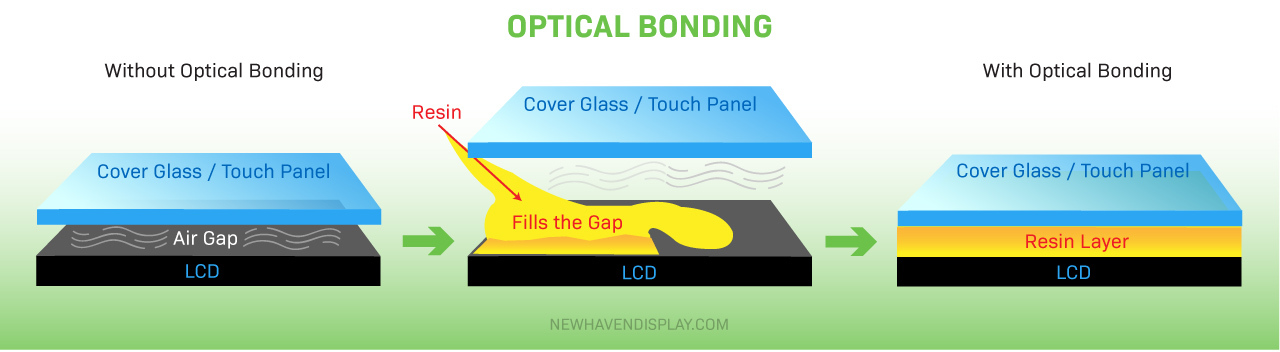
How Optical Bonding Works
Adhesive Application
A clear adhesive (liquid, gel, or film) is applied between the display and cover glass.
Common adhesives:
LOCA (Liquid Optically Clear Adhesive) – UV-cured resin.
OCA (Optically Clear Adhesive Film) – Pre-cut dry film.
Lamination Process
The layers are pressed together under controlled conditions (vacuum, heat, or UV light).
Curing
The adhesive hardens, creating a seamless bond.
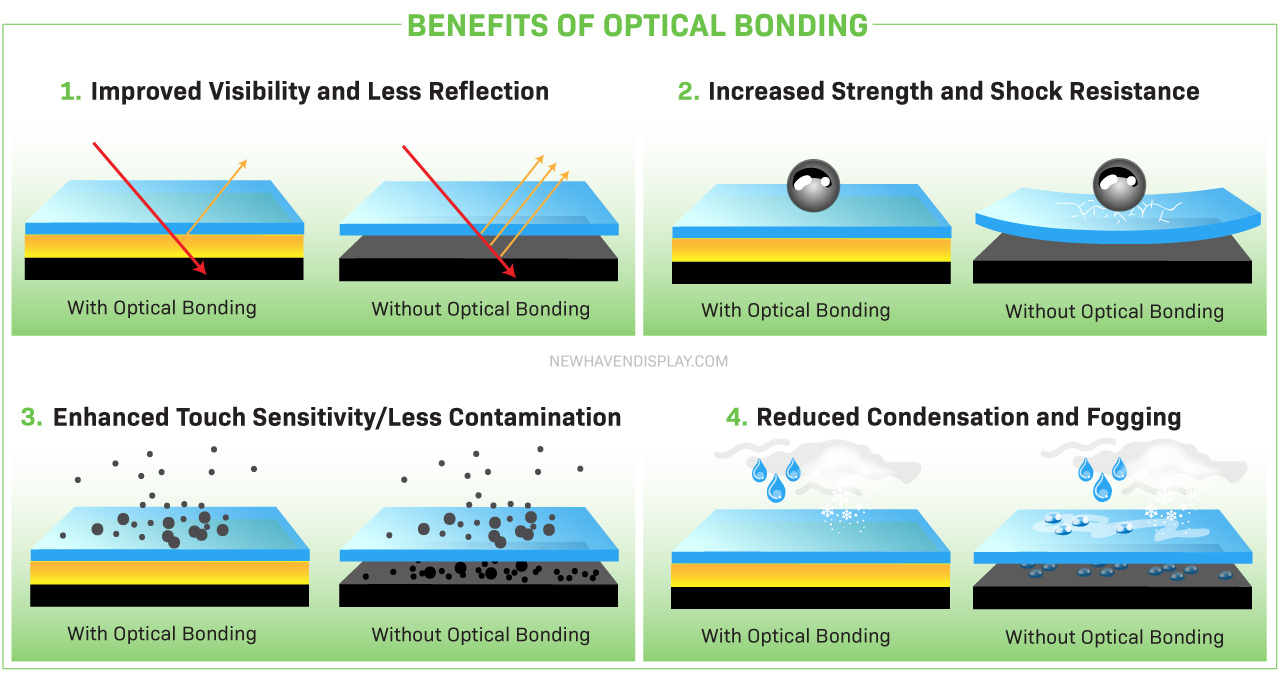
Why Optical Bonding so Important?
1. Improved Display Readability
Reduces Reflections & Glare: The adhesive fills the air gap between the display and glass, minimizing internal reflections and improving visibility in bright environments (e.g., sunlight).
Enhances Contrast & Brightness: Without an air gap, light scattering is reduced, making images appear sharper and more vibrant.
2. Increased Durability & Protection
Shock & Vibration Resistance: The bonded layer adds structural strength, making the display more resistant to impacts and mechanical stress.
Dust & Moisture Prevention: Eliminating the air gap prevents dust, condensation, and liquid ingress, which is crucial for outdoor, medical, or industrial applications.
3. Better Touch Sensitivity (for Touchscreens)
Reduces parallax error (misalignment between touch input and display content) since the touch layer is closer to the screen.
Improves touch accuracy, especially for capacitive touchscreens.
4. Extended Display Lifespan
Protects against humidity, temperature fluctuations, and UV exposure, which can degrade display components over time.
5. Thinner & Lighter Designs
Removing the air gap allows for slimmer device designs without sacrificing durability.
Common Applications:
Consumer Electronics (smartphones, tablets, laptops)
Automotive Displays (dashboard screens, infotainment systems)
Medical Devices (surgical monitors, diagnostic equipment)
Industrial & Military Equipment (ruggedized displays, outdoor kiosks)
Types of Optical Bonding:
Liquid Optically Clear Adhesive (LOCA) – UV-cured resin for high clarity.
Dry Optical Bonding (OCA Film) – Pre-cut adhesive films for precise bonding.
Gel-based Bonding – Used in high-flexibility or curved displays.
Conclusion:
Optical bonding significantly enhances display performance, durability, and usability, making it essential for high-end, rugged, or outdoor applications where visibility and reliability are critical.