


The Critical Divide: Industrial Panels vs. Wide-Temperature Industrial Panels in Harsh Environments
Introduction
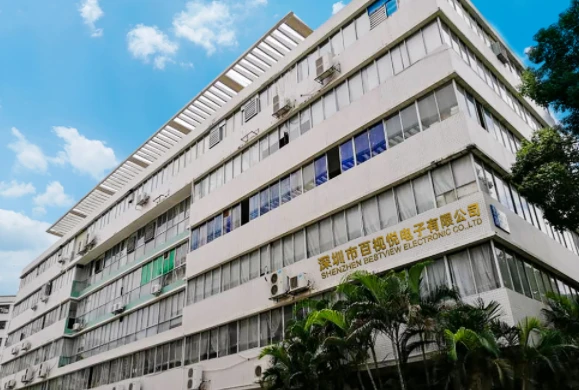
Industrial display panels are engineered for reliability beyond consumer-grade screens, but within this category, a crucial distinction exists: standard industrial panels versus wide-temperature industrial panels. While both serve critical roles, wide-temperature variants are indispensable for applications exposed to extreme cold, heat, humidity, or continuous operation. Companies like Shenzhen BestView Electronic Co., Ltd. prioritize these solutions for deployments where failure is not an option-think Arctic logistics, steel mills, or battlefield medical devices.
I. Core Technical Distinctions
Standard Industrial Panels: Typically operate within 0°C to 50°C 1. Suitable for controlled environments like indoor machinery or medical equipment.
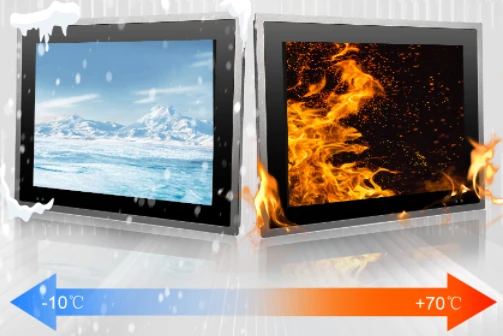
Wide-Temperature Panels: Function reliably from -20°C to +70°C (storage: -30°C to +80°C) 58. This enables operation in Arctic warehouses (-30°C) or near furnaces (70°C+).
2. Material & Component Engineering

Wide-temperature panels leverage specialized materials absent in standard versions:
Liquid Crystal Formulations: Low-freezing-point LC mixtures prevent viscosity spikes at subzero temperatures, ensuring fluid response 8.
Polarizers & Sealants: High-temperature-resistant optical films and adhesives prevent delamination or fogging in humid conditions 1.
Industrial-Grade Electronics: Components like NXP diodes, AVX tantalum capacitors, and temperature-compensated circuits maintain signal integrity during thermal expansion 9.
Standard panels rely on passive convection, while wide-temperature designs integrate:
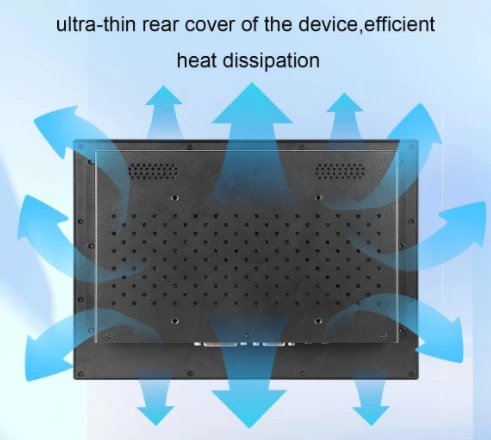
Enhanced Heat Dissipation: Copper heat sinks and strategic PCB layouts minimize hot spots 8.
Active Cooling: Fans or liquid cooling in extreme scenarios (e.g., metal smelting plants) 8.
Preheating Circuits: Gradual warm-up protocols prevent cold-start damage in subzero conditions 8.
4. Environmental Testing & Reliabilit
Wide-temperature panels undergo brutal validation:
72-Hour Thermal Cycling: Exposing panels to -20°C ↔ +75°C transitions to simulate years of field use 1.
Humidity Resistance: Operation at 95% RH (non-condensing) ensures functionality in tropical or coastal settings 57.
II. Performance in Harsh Environments: Why Wide-Temperature Panels Dominate
| Performance Metric | Standard Industrial Panel | Wide-Temperature Panel |
|---|---|---|
| Low-Temperature Start | Fails below 0°C | Starts at -20°C 5 |
| High-Temperature Stability | Image fade >50°C | Stable up to 70°C 8 |
| Response Time | Slows by 30%+ at extremes | <10% deviation via LC optimization 1 |
| MTBF (Continuous Use) | ~20,000 hours | 50,000+ hours 9 |
Real-World Impact:
In cold-chain logistics, standard panels freeze solid in -25°C warehouses, while wide-temperature screens show real-time inventory data 8.
Oil rig control rooms use wide-temperature displays because standard units dim or ghost when ambient temperatures hit 60°C 1.
III. Key Applications Driving Adoption
1. Critical Infrastructure
Power Grids: Substation monitors in Siberia (-20°C) or Saudi deserts (55°C).
Transportation: Railway signage exposed to snowstorms or desert sun.
2. Industrial Automation
Steel Mills: Control panels near blast furnaces require heat-resistant backlights and sealed circuits 8.
Robotics: Warehouse automation in unheated/distribution centers.
3. Defense & Field Deployments
Military vehicles, portable medical devices, and Arctic research stations-where repair is impossible.
4. Outdoor Kiosks & Smart Cities
Bus stop displays or EV charging stations needing 24/7 operation year-round.
IV. Implementation Challenges & Solutions
Cost Premium:
Wide-temperature panels cost 30–50% more due to exotic materials (e.g., titanium-sealed EDGE connectors) 3.
Driver Board Integration:
Companies like Shenzhen Soda Display design matching wide-temperature driver boards (e.g., SD-AD2556T) supporting -40°C to +80°C operation with HDMI/VGA/DP inputs 57.
Power Optimization:
Wide-temperature backlights consume ≤2W via PWM dimming and low-voltage LED strings 5.
V. The Future: Smart Factories & AI Edge Devices
As industries embrace IoT, wide-temperature displays are evolving:
On-Panel Diagnostics:
Embedded sensors predicting thermal stress failures 8.
Lightweight AR Integration:
MicroLEDs from partners like RayOptics enabling heads-up displays in firefighting helmets 4.
Green Manufacturing:
ROHS-compliant wide-temperature panels (e.g., Soda's lead-free designs) aligning with EU sustainability mandates 510.
Why Shenzhen BestView & Peers Prioritize Wide-Temperature
For harsh-environment applications-common in mining, energy, and defense-wide-temperature panels are non-negotiable. They transcend the limitations of standard industrial displays through physics-defying materials, ruthless validation, and purpose-built support electronics. As Shenzhen BestView Electronic Co., Ltd. exemplifies, suppliers investing in this niche combine extended environmental specs with AI-ready interfaces, ensuring that when environments turn extreme, human oversight never goes blind.
First-class professional team for you to recommend products more in line with your needs. Perfect after-sale services exempt your worries.
Our address
No.5F, Building 24, Longbi Industry City, Bantian Street, Longgang District, Shenzhen City, Guangdong Province, China
Phone Number
+86-755-28447130
+8613632535154
sales@bestview.cc

| 7 panel pc, display monitor,touch panel computer,translucent customizable side panel lcd display,atex panel pc,12 panel pc,ip65 pc,panel pc 15,all in one touch screen monitor,fanless industrial touch panel pc,outdoor lcd display panel,pc sensor panel display,19 panel pc,linux panel pc |