Key Features of Industrial Displays,Industrial Monitor
Industrial displays are specialized display devices designed for industrial environments,
emphasizing high reliability, durability, and adaptability to complex conditions.
Their main characteristics include:
High brightness, wide temperature ,different touch ,different function ,waterproof ,
industrail touch monitor ,industrial lCD monitors
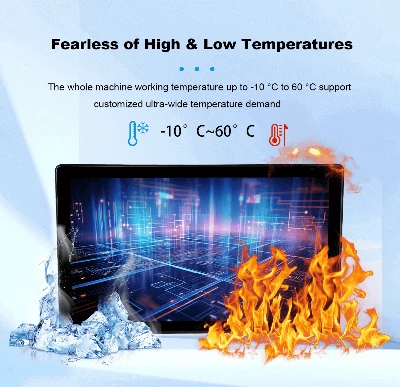
1. High Environmental Adaptability Wide temperature operation for industrial monitor:
Supports extreme temperatures (e.g., -20°C to 70°C), suitable for environments like high-temperature workshops or cold storage.
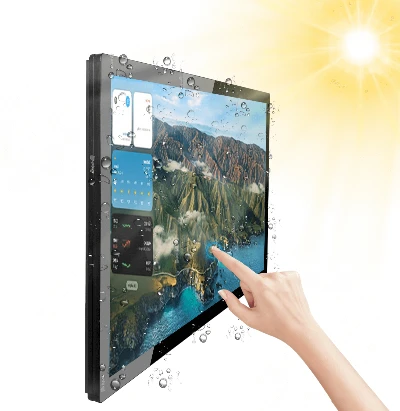
Dust/water resistance: Typically rated IP65/IP67 to prevent ingress of dust and liquids. Vibration/shock resistance: Reinforced structure
for use in high-vibration or high-impact scenarios (e.g., production lines, vehicle-mounted systems).industrial touch screen monitor
2. Long Lifespan and Stability Industrial-grade components:
Uses durable materials (e.g., solid-state capacitors, metal enclosures) with a lifespan of 5–10 years, far exceeding consumer-grade products.
24/7 continuous operation: Designed for non-stop operation without overheating or aging issues. Low failure rate:
Rigorously tested (e.g., EMC anti-interference, salt spray testing) to ensure stability in harsh environments.industrial touch screen monitor with pc
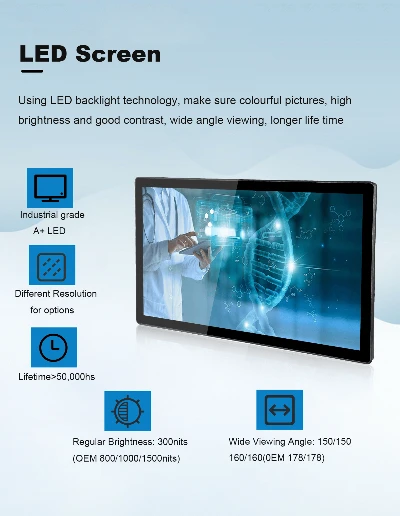
3. Optimized Display Performance High brightness (500–2000 nits) industrial monitor:
Remains visible under strong ambient light (e.g., outdoor or workshop lighting). Wide viewing angles (IPS/VA panels): Up to 170°+ viewing
angles for multi-angle visibility. High contrast and color accuracy: Ensures precise rendering of control interfaces or inspection images.
industrial touch screen monitor open frame
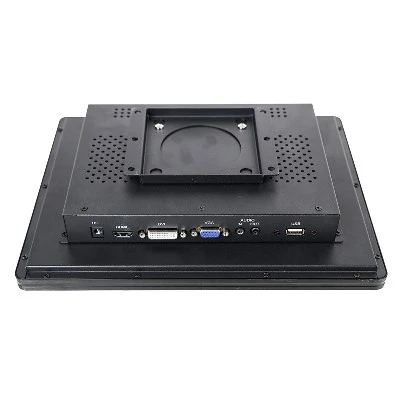
4. Connectivity and Expandability Diverse interfaces:HDMI certificated monitor
Supports industrial-standard ports (e.g., VGA, HDMI, DVI, RS232/485, GPIO) for compatibility with PLCs, industrial PCs, etc.
Modular design: Expandable with touchscreens, cameras, barcode scanners, or other functional modules.industrial monitor
5. Installation and Protection Flexible mounting options:
Panel-embedded, rack-mounted, wall-mounted, or VESA-compatible. Explosion/corrosion resistance: Complies with
certifications like ATEX for hazardous industries (e.g., oil/gas, chemical plants). Electromagnetic
compatibility (EMC): Resists interference to ensure stable signal transmission.industrial touch monitor
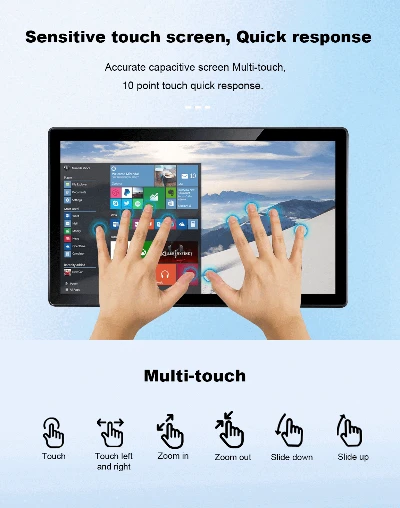
6. Touch Functionality (Optional) Industrial touchscreens monitors:
Supports resistive, capacitive, or infrared touch, operable with gloves or in wet conditions. Anti-interference
design: Minimizes false touches for precise input (e.g., fast-paced production line operations).touch screen monitor industrial
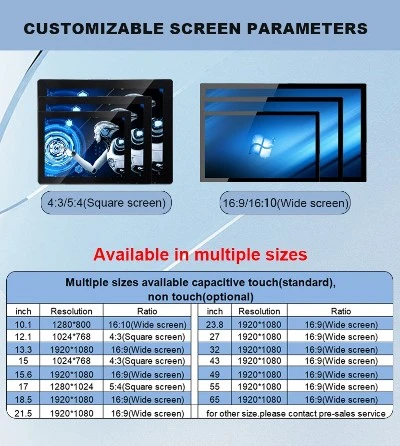
7. Customization Capabilities Size/resolution customization:
Ranges from 5-inch to 55-inch displays for diverse integration needs. Specialized features: Customizable
options like wide-voltage input (DC 9–36V), sunlight-readable displays, or anti-glare coatings.industrial touch screen
8. Maintenance and Compatibility Easy maintenance for industrail monitor:
Modular components enable quick repairs to reduce downtime. Multi-system compatibility: Works with Windows, Linux,
Android, and real-time operating systems (RTOS). Typical Applications Factory automation (HMI interfaces) Medical equipment,
rail transit systems Outdoor digital signage, smart warehouses Energy monitoring, military/defense equipment.monitor industrial