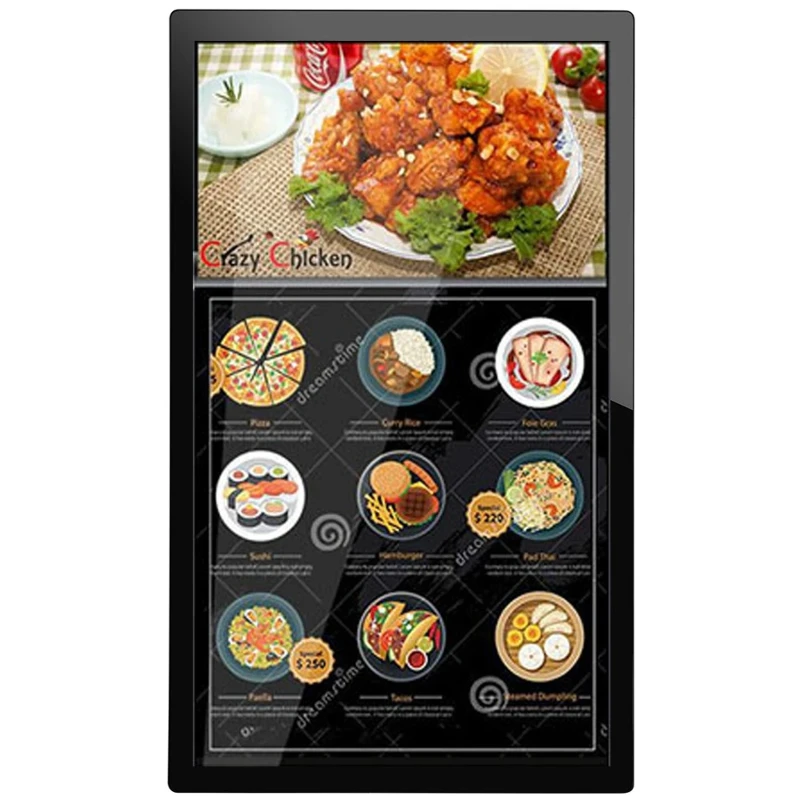
To power a 32-inch high-brightness advertising display with solar energy, you need to correctly size the battery capacity and solar panel power based on the display's power consumption and intended usage time.
Here's a step-by-step guide:
⚙️ 1. Estimate the Display's Power Consumption
01
The power consumption of a 32-inch high-brightness advertising display varies based on brightness, model, and operating mode (e.g., always-on, with/without sound).
02
Typically, such a display consumes between 100W to 200W. For this example, we assume 150W.
03
Check the actual power rating on the product specification sheet or energy label for accuracy.
🔋 2. Calculate Daily Energy Consumption
Determine how many hours per day the display will operate. Assume 12 hours of continuous operation (day and night):
01
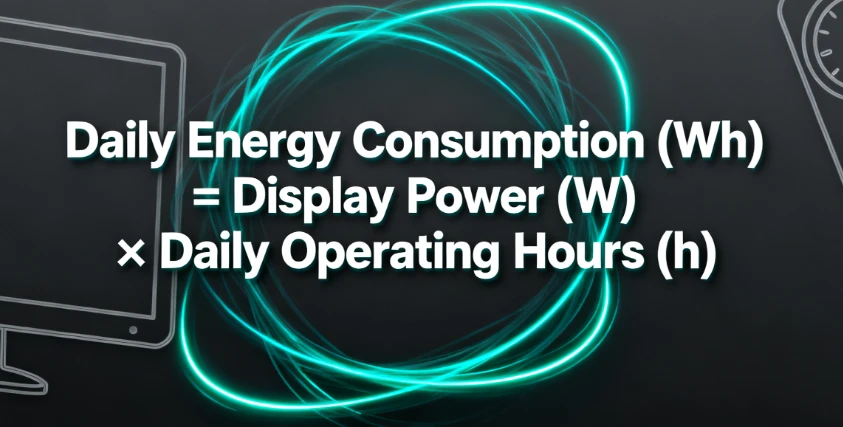
Daily Energy Consumption (Wh) = Display Power (W) × Daily Operating Hours (h)
02
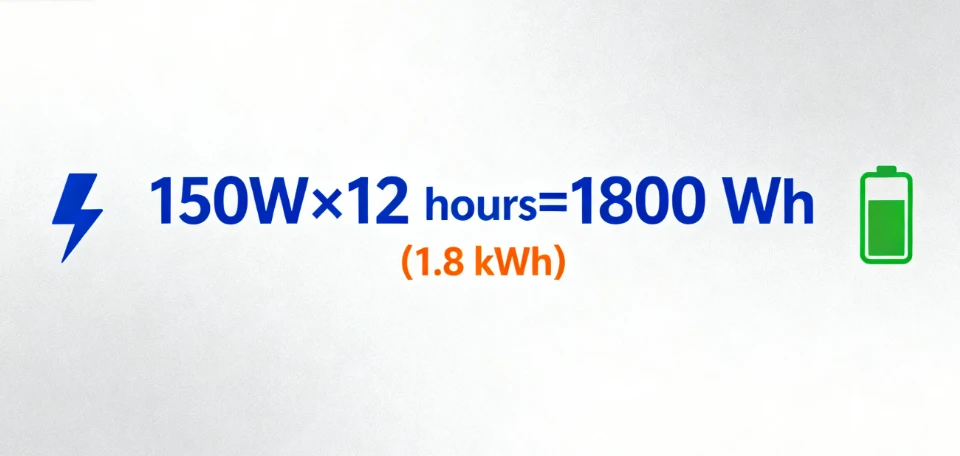
Example: 150W × 12 hours = 1800 Wh (1.8 kWh)
🔋 3. Determine Battery Capacity
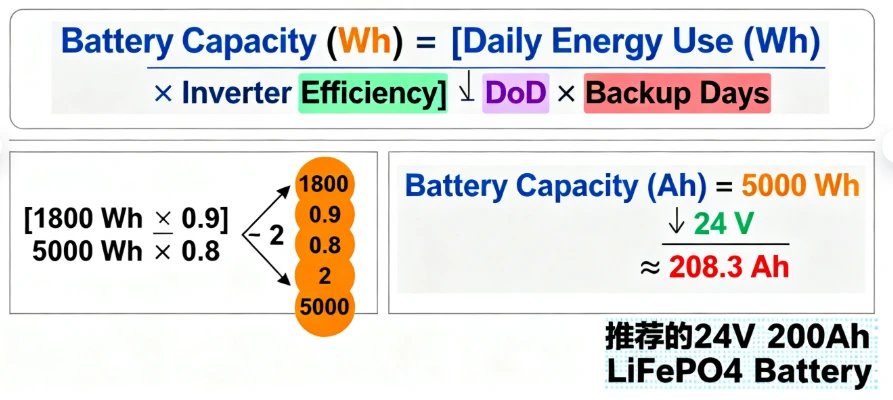
The battery must store enough energy to power the display daily, with backup for cloudy days.
Inverter Efficiency: If using an inverter (to convert DC to AC), account for ~90% efficiency.
Battery Depth of Discharge (DoD): To prolong battery life, do not fully discharge. Use 80% DoD for LiFePO4 batteries.
Backup Days: Include 1-2 days of backup for cloudy weather (1 day used here).
Calculation Formula:
Battery Capacity (Wh) = [Daily Energy Use (Wh) ÷ Inverter Efficiency] ÷ DoD × Backup Days
Example: [1800 Wh ÷ 0.9] ÷ 0.8 × 2 ≈ 5000 Wh
Convert to Amp-Hours (Ah):
Common system voltages: 12V/24V/48V. Using 24V:
Battery Capacity (Ah) = 5000 Wh ÷ 24 V ≈ 208.3 Ah
→ Recommended: 24V 200Ah LiFePO4 Battery (lighter, longer lifespan, maintenance-free).
☀️ 4. Calculate Solar Panel Power
Solar panels must recharge the battery during daylight hours while powering the display.
Sunlight Hours: Assume 4 hours of effective daily sunlight (adjust based on your location).
System Efficiency: Account for losses (wiring, controller); assume 75% efficiency.
Calculation Formula:
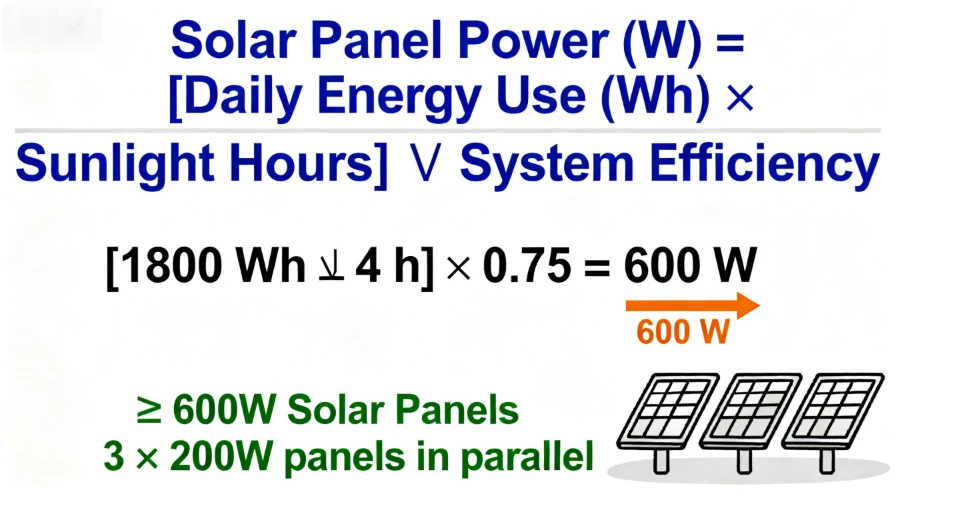
Solar Panel Power (W) = [Daily Energy Use (Wh) ÷ Sunlight Hours] ÷ System Efficiency
Example: [1800 Wh ÷ 4 h] ÷ 0.75 = 600 W
→ Recommended: ≥600W Solar Panels (e.g., 3 × 200W panels in parallel).
🛒 5. Purchasing Solar Panels & Components
| Component | Key Considerations | Recommendations |
|---|---|---|
| Solar Panels | Efficiency, warranty, brand | Monocrystalline panels (high efficiency), e.g., Canadian Solar |
| Solar Controller | Match system voltage/current; type | MPPT Controller (efficient for large systems) |
| Battery | Type, cycle life, DoD | LiFePO4 Battery (long lifespan, high safety) |
| Inverter | Power rating (>display power), waveform | Pure sine wave inverter, 20-30% power margin |
Where to Buy:
Purchase from solar system installers, specialized distributors (online/offline), or manufacturer direct. Verify vendor reputation, product specs, and warranties.
💡 Important Notes
01
请替换当前内容 China Unicom manpower is specialized in Real-World Measurements: Use your display's actual power rating and local sunlight data for accurate calculations.
02
Professional Advice: Consult a solar installer for optimal design and installation.
03
Safety First: Ensure proper electrical handling or hire a professional.
If you provide the display's exact power rating (in Watts) and your city, I can help refine the estimates!