


How does a fully enclosed fanless design dissipate heat? Unveiling the cutting-edge technology of industrial All in One Panel PC?
In industrial environments, device stability and reliability are crucial. To adapt to dusty, high-humidity, and harsh operating environments, fully enclosed, fanless industrial tablet computers have emerged. However, without a fan, how do these devices efficiently dissipate heat and ensure long-term stable operation? This article will explore the key principles behind heat dissipation, including heat dissipation techniques, material selection, and design optimization.
1. Heat Dissipation Challenges of Fanless Designs
Traditional fan-based cooling relies on airflow to quickly remove heat. However, fully enclosed fanless designs, with limited airflow, present the following heat dissipation challenges:
Internal Heat Accumulation: The operation of electronic components (such as CPUs and GPUs) generates significant heat. If not dissipated promptly, this can lead to device performance degradation or even failure.
No Active Heat Dissipation: Lacking active cooling devices such as fans, heat can only be dissipated through natural conduction or radiation.
Enclosed environments place high demands on materials and structures: A fully enclosed design not only limits heat dissipation but also increases the thermal conductivity requirements of the casing material.
Therefore, scientific heat dissipation design has become a key technology for fully enclosed fanless industrial all-in-one computers.

II. Heat Dissipation Solutions
1. Use of Thermally Conductive Materials
Fully enclosed fanless industrial tablets utilize a large number of high-thermal-conductivity materials to quickly transfer heat from the heat source to the outside.
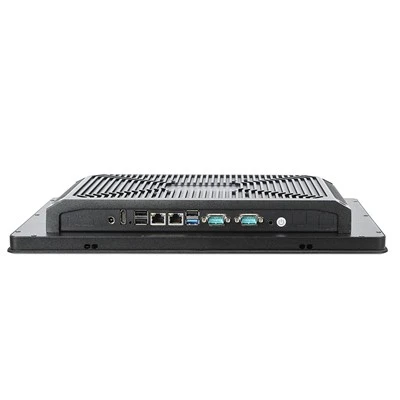
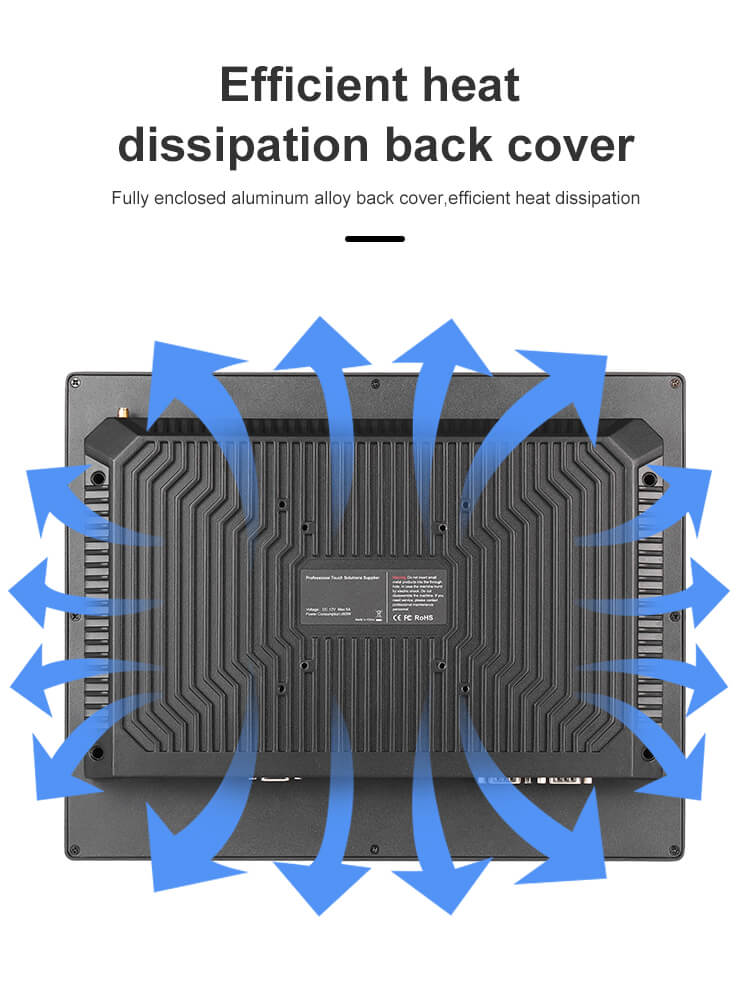
Aluminum Alloy Housing: The Kongxian G3 industrial tablet, for example, features a fully enclosed aluminum alloy housing design, which not only provides excellent thermal conductivity but also enhances the device's shock and dust resistance.
Thermal Silicone Pads: Thermally conductive silicone pads are placed between heat-generating components like the CPU and GPU and the housing to reduce thermal resistance in the heat conduction path.
Heat Pipe Technology: Some high-performance devices also incorporate built-in heat pipes, which utilize the evaporation and condensation cycle of liquid to quickly transfer heat from core components to external cooling areas.
2. Natural Convection Cooling
The Kongxian G3 industrial tablet features a fully enclosed, fanless design that optimizes natural convection. This design utilizes natural airflow generated by temperature differences around the device to dissipate some of the heat.
The body design utilizes a finned housing to increase the heat dissipation area and improve heat dissipation efficiency.
The rational arrangement of internal components ensures even heat distribution, preventing local overheating.
3. Optimized Heat Transfer Path
During the design process, engineers paid special attention to the heat transfer path from the heat source to the housing to maximize heat dissipation efficiency.
Short Path Design: Shortens the heat transfer path from the component to the housing, reducing thermal resistance.
Vapor Chamber Technology: A vapor chamber is used to disperse heat within the device, ensuring uniform temperature distribution across the housing.
4. Intelligent Power Management: A combination of hardware and software is used to reduce heat generation during operation:
Dynamic Frequency Scaling: Automatically reduces the CPU and GPU operating frequencies during low load conditions, reducing power consumption and heat generation.
Customized Cooling Solutions: Optimize the cooling design based on the industrial tablet's application scenario, such as temperature control equipment or outdoor terminals.

III. Application Advantages of a Fully Enclosed Fanless Design
Thanks to advanced heat dissipation technology, fully enclosed fanless industrial tablets demonstrate numerous advantages in practical applications:
Adaptability to Harsh Environments: The fanless design prevents dust and moisture from entering the device, making it suitable for dusty, humid, or highly polluted industrial environments.
Reduced Failure Rate: The elimination of moving parts, such as fans, reduces mechanical wear and equipment problems caused by fan failure.
Quiet Operation: The fanless design allows for virtually silent operation, making it suitable for applications sensitive to ambient noise.
Conclusion
The heat dissipation technology of fully enclosed fanless industrial tablets represents not only innovations in materials and design, but also a response to the high reliability and adaptability demands of industrial equipment. Industrial tablets with aluminum alloy casings, such as the Kongxian G3, not only offer excellent heat dissipation performance but also provide both protection and stability, making them an ideal choice for industrial environments. In the future, as technology continues to advance, fully enclosed fanless industrial tablets will play a greater role in even more areas, providing reliable support for industrial automation.
If you are interested in the technical details or application scenarios of this type of device, please feel free to discuss further.